7 Secrets of Peter Mandelson’s Shocking Fall from Power


Peter Mandelson was seen as one of the most powerful and resilient figures in British politics. Often nicknamed the “Prince of Darkness,” he played a key role in shaping the New Labour era and helped engineer the rise of a new political generation. Even after facing two high-profile cabinet resignations, he famously described himself as a “fighter, not a quitter,” reinforcing his reputation as a political survivor who could weather almost any storm.
But in early 2026, that long-standing image began to unravel.
The dramatic shift came after the US Department of Justice released more than three million documents widely referred to as the “Epstein Files.” Within those records were serious allegations linking Peter Mandelson to questionable dealings that went far beyond a casual association. The files reportedly pointed to claims of leaking sensitive government information, as well as suspicious financial transactions that raised red flags for investigators.
The situation escalated quickly. On February 23, 2026, Peter Mandelson was arrested in London, marking a stunning moment in British political history. What once seemed like just another controversy soon turned into a full-blown crisis—one that threatens to permanently damage a career built over decades.
This is not simply another political scandal. It represents a dramatic fall from grace for a man who once appeared untouchable at the top of British public life.
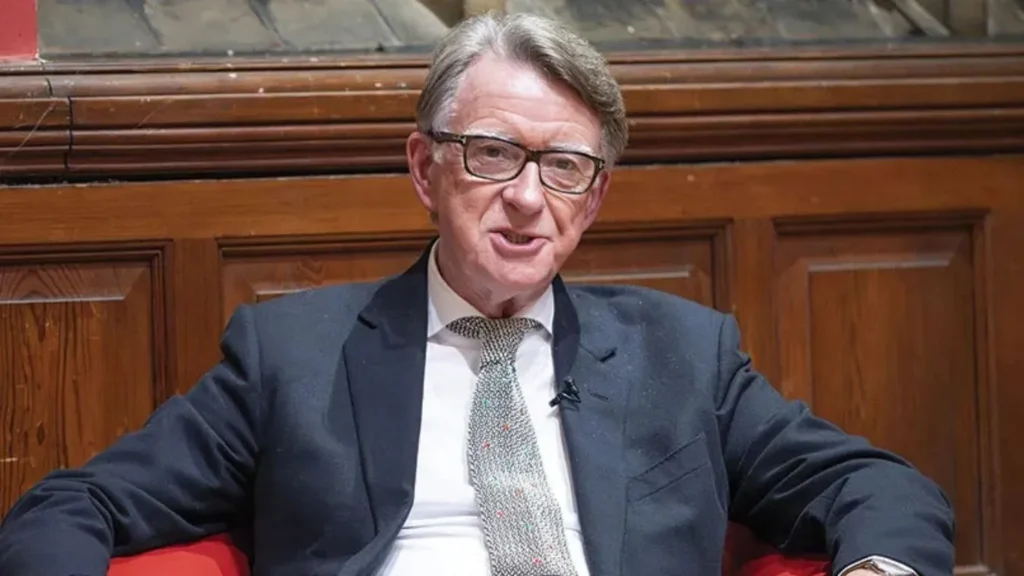
Peter Mandelson freed on bail as police investigate alleged misconduct tied to Epstein files.
Table of Contents
Secret 1: The “Transactional” Friendship with Jeffrey Epstein
For years, Peter Mandelson downplayed his connection to Jeffrey Epstein, describing it as nothing more than a regrettable social acquaintance. In political circles, powerful friendships are nothing unusual. But what has now come to light paints a far more troubling picture—one that goes beyond polite dinners and casual meetings.

According to the newly released “Epstein Files,” a massive collection of documents made public in early 2026, the relationship involving Peter Mandelson allegedly had a transactional edge. Investigators claim that while serving as UK Business Secretary in 2009, he may have shared sensitive government information during the height of the global financial crisis.
That’s where the controversy deepens.
The documents reportedly suggest that Peter Mandelson provided early insight into internal discussions surrounding major economic decisions, including plans connected to Europe’s response to the Greek debt crisis. In financial markets, even a small piece of advance information can translate into enormous profit. The central question now being asked is simple but serious: why would confidential government details be shared with someone like Epstein?
Authorities believe this alleged flow of information is at the heart of the misconduct in public office investigation that led to Peter Mandelson’s recent arrest. What was once dismissed as an embarrassing friendship is now being scrutinized as something potentially far more damaging.
For a politician known for mastering media narratives and surviving scandal, this may be the moment where spin is no longer enough.
Secret 2: The $75,000 “Mystery Payments” and the Stipend
If private emails raised eyebrows, the financial records reportedly uncovered in the Epstein Files have raised even bigger questions. At the center of this second controversy is Peter Mandelson and a series of payments that investigators claim were made by Jeffrey Epstein in the early 2000s.
According to documents released by US authorities, Epstein allegedly transferred three separate payments of $25,000 between 2003 and 2004 to accounts linked to Peter Mandelson. That brings the total to $75,000. Mandelson has publicly stated that he has “no record or recollection” of receiving these funds. However, investigators say the documented transfers are now part of the formal inquiry.
But the reported financial links did not end there.
During 2009 and 2010, Epstein is alleged to have placed Mandelson’s husband, Reinaldo Avila da Silva, on a monthly stipend of $4,000. On top of that, records cited in the investigation suggest Epstein may have covered the cost of an expensive osteopathy course for Mandelson’s partner during the same period — a time when the global financial crisis was still causing economic turmoil.
So why does this matter?
In politics, financial relationships can quickly turn into conflicts of interest. When someone holding public office is alleged to have direct or indirect financial ties to a private financier, serious ethical questions follow. For Peter Mandelson, who served as Business Secretary during a critical economic period, these reported payments have intensified scrutiny over whether his judgment or decisions could have been influenced.
The controversy has also had wider consequences. His consulting firm, Global Counsel, reportedly went into administration after major corporate clients distanced themselves from the unfolding scandal. In high-level business and politics, reputation is everything — and even unanswered financial questions can cause lasting damage.
For Peter Mandelson, the issue is no longer just about friendship or association. It’s about money, influence, and whether those two worlds crossed a line.
Read more: 7 Secrets of Peter Mandelson’s Shocking Fall from PowerSecret 2: The $75,000 Mystery Payments
While leaked emails created suspicion, the real controversy surrounding Peter Mandelson centers on reported financial transactions. Documents linked to the Epstein Files claim that between 2003 and 2004, Jeffrey Epstein transferred three payments of $25,000 each — totaling $75,000 — to accounts connected to Peter Mandelson.
Mandelson has stated that he has no memory or record of receiving these funds. However, investigators say the documented transfers are now part of an ongoing review, raising serious questions about transparency and accountability.
The situation becomes even more complicated with additional financial links. Reports suggest that between 2009 and 2010, Epstein allegedly provided a monthly stipend of $4,000 to Mandelson’s husband. There are also claims that Epstein covered tuition costs for a professional osteopathy course during the same period.
These alleged financial connections are significant because in public office, money and influence are closely examined. For Peter Mandelson, who held a senior government role during a critical economic period, such payments create concerns about potential conflicts of interest.
The fallout has extended beyond politics. His consulting firm, Global Counsel, reportedly faced severe business consequences as corporate clients chose to distance themselves from the controversy. In both politics and business, reputation is crucial — and financial questions of this scale can have lasting impact.
For Peter Mandelson, this issue is no longer just about association. It is about whether financial ties crossed ethical boundaries.
Secret 4: The Starmer “Civil War” and the Vetting Failure
The arrest of Peter Mandelson has not only shaken his personal legacy — it has triggered a political storm inside Westminster. What started as an individual scandal has quickly evolved into a major credibility crisis for Prime Minister Keir Starmer and the wider Labour leadership.
The biggest question being asked right now is simple: why was Peter Mandelson appointed as UK Ambassador to the United States despite known concerns about his past associations?
In recent statements, Starmer said Mandelson had “betrayed” the country and failed to fully disclose important details during the vetting process. However, reports emerging in February 2026 suggest that internal warnings may have been raised well before the appointment was finalized — and possibly overlooked.
Key Developments in the Fallout
1. The Resignation of Morgan McSweeney
Morgan McSweeney, one of Starmer’s most influential advisers, has reportedly stepped down from his role. According to insiders, he strongly supported Peter Mandelson’s appointment to the Washington post, even though concerns about Mandelson’s past “social” links to Jeffrey Epstein were already circulating.
2. The Vetting Controversy
Parliament has now demanded the release of what are being referred to as the “Mandelson Files” — internal vetting documents from late 2024. Early reports suggest that some officials flagged potential risks related to offshore financial interests and Epstein connections. Critics claim those warnings were ultimately dismissed by senior members of the Prime Minister’s inner circle.
3. The Peerage Under Threat
In an effort to distance the government from the controversy, Keir Starmer is reportedly accelerating legal steps to strip Peter Mandelson of his peerage and his “Lord” title. If approved, it would mark an extraordinary fall from grace for one of Labour’s most recognizable figures.
The Political Impact
For many Labour supporters, the re-emergence of Peter Mandelson symbolized the return of the party’s experienced “old guard.” Now, his arrest is being seen by some as a major misjudgment by the current leadership.
This situation is no longer just about Peter Mandelson. It has become a broader test of trust and accountability for the Labour government. While the so-called “Prince of Darkness” may be facing his own political end, the shadow of this scandal could linger over Downing Street for a long time.
Secret 5: The “Asset Sell-Off” Leak and Market Manipulation Claims
The controversy surrounding Peter Mandelson has now moved beyond reputational damage and into the realm of serious criminal allegations. At the center of the police investigation is a key question: did Peter Mandelson misuse his position as Business Secretary to provide confidential economic information to Jeffrey Epstein?
According to documents reportedly released this month, investigators are reviewing a June 2009 email in which Peter Mandelson allegedly forwarded a “Restricted” Downing Street memo to Epstein. The memo is said to have outlined sensitive plans involving the proposed sale of up to £20 billion in UK government assets, a move designed to stabilize the economy after the 2008 financial crisis.
Why This Allegation Is So Serious
1. Potential Market Advantage
If advance details of a large government asset sale were shared privately, it could have allowed investors to strategically position themselves before the information became public. In financial markets, early access to this kind of information can translate into substantial profit — raising concerns about unfair advantage and possible market manipulation.
2. Alleged Lobbying Over Bankers’ Bonuses
Investigators are also reviewing emails that reportedly suggest Peter Mandelson discussed lobbying Cabinet colleagues about easing a proposed tax on bankers’ bonuses. While political lobbying itself is not illegal, the concern lies in whether any such discussions were influenced by private financial relationships.
3. The Internal Memo Under Scrutiny
One 2010 message reportedly shows Mandelson forwarding an internal government note to Epstein with the remark, “Interesting note that’s gone to the PM.” Critics argue that sharing confidential government material in this manner, if proven, would represent a serious breach of public trust.
These allegations form a central part of the misconduct in public office investigation now being handled by the Metropolitan Police, who were recently seen conducting searches at properties linked to Mandelson in Wiltshire and Camden.
For decades, Peter Mandelson was known as a master political strategist who understood the fine line between power and controversy. Prosecutors now argue that, in this case, he may have crossed that line entirely. If the claims are substantiated, the issue will not just be about poor judgment — it will be about whether confidential national economic plans were treated as private information for personal networks.
Secret 6: The Photo Controversy and the “Lost” Vacation Questions
Beyond the financial allegations, the personal dimension of the controversy surrounding Peter Mandelson has added another layer of scrutiny. As investigators reviewed millions of documents reportedly released by the US Department of Justice, some materials appeared to challenge Mandelson’s long-standing claim that he was “never close” to Jeffrey Epstein.
One of the most talked-about items was a photograph allegedly taken in 2005 at one of Epstein’s private residences. The image, which surfaced publicly in early 2026, quickly spread online and fueled debate about the true nature of their association. While the photo itself became a viral topic, the larger issue is what it suggests about the depth of the relationship.

The “Memory Gap” Controversy
Conflicting Accounts
For years, Peter Mandelson maintained that his meetings with Epstein were limited and occasional. However, documents cited in recent reports suggest he stayed at Epstein’s Manhattan townhouse in 2009, a period that has raised additional questions about the timeline and frequency of contact.
The Interview Defense
In a late-2025 interview, Mandelson argued that he had no knowledge of Epstein’s criminal activity and suggested that his own sexuality meant he was not exposed to the misconduct that later came to light. Critics, however, responded that personal identity does not remove the responsibility of a senior public official to recognize and question suspicious circumstances.
Public Reaction
The response from voters and advocacy groups has been strong. Many argue that proximity to a powerful figure later convicted of serious crimes should have prompted greater awareness and caution. Instead, critics say the situation reflects a troubling lack of judgment.
Why This Matters
This episode adds to the broader narrative surrounding Peter Mandelson — one that now focuses not only on alleged financial and political misconduct but also on personal decision-making. For many observers, the controversy highlights what they see as a pattern: maintaining access to elite circles and influential networks despite growing red flags.
In today’s political climate, perception can be as damaging as proof. The resurfaced photo and disputed memories have further weakened Mandelson’s credibility, shifting public opinion from skepticism to open criticism. Whether or not the allegations are ultimately proven in court, the reputational impact on Peter Mandelson appears profound and lasting.
Secret 7: The Final Act — Arrest, Bail, and an Uncertain Future
The final chapter in the crisis surrounding Peter Mandelson has unfolded with dramatic speed. On February 23, 2026, television cameras captured the former Cabinet minister being escorted from his north London home in Camden by officers from the Metropolitan Police. For a politician who once stood at the center of British power, the images marked a stunning reversal of fortune.
Police confirmed that Peter Mandelson was arrested on suspicion of misconduct in public office following search warrants executed at properties in both London and Wiltshire. Although he was released on bail in the early hours of February 24, the investigation remains ongoing. In the UK, misconduct in public office is considered a grave offense and, in the most serious cases, can carry a potential maximum sentence of life imprisonment.
What Makes This Moment Different?
Political Isolation
In the days leading up to his arrest, Peter Mandelson resigned from the Labour Party and stepped away from the House of Lords, saying he did not want to cause further damage to the government. The move effectively left him without formal political affiliation or title — a remarkable shift for someone who once shaped the party’s modern identity.
The “Best Pal” Note
Among the documents reportedly circulating in connection with the Epstein files is a handwritten note in which Mandelson allegedly referred to Jeffrey Epstein as his “best pal.” If authentic, the message appears to contradict years of public statements minimizing the closeness of their relationship.
Government Response
Prime Minister Keir Starmer has publicly criticized Mandelson, accusing him of providing incomplete information during the vetting process for his diplomatic appointment. The controversy has further intensified political pressure on the current administration.
The Bigger Picture
For many observers, this is more than a personal scandal. It represents the dramatic collapse of a political career that spanned four decades and played a defining role in modern British politics.
Whether Peter Mandelson can clear his name or rebuild his reputation will ultimately depend on the outcome of the legal process. For now, however, the once-dominant strategist finds himself at the center of the most serious battle of his public life — one that may determine how history remembers him.
Conclusion: The Final Verdict on Peter Mandelson?
After four decades of navigating the highest levels of power, Peter Mandelson finds himself in the most vulnerable position of his career. From the 1997 landslide to the 2026 Epstein scandal, his journey has been defined by a unique ability to survive—until now. The “Prince of Darkness” is no longer just facing a political setback; he is facing a legal battle that could redefine the boundaries of accountability for the British elite.
As the Metropolitan Police continue their investigation into Peter Mandelson and the alleged leaking of market-sensitive data, one thing is certain: the era of New Labour is officially over. Whether he is remembered as a strategic genius or a cautionary tale of proximity to power, the name Peter Mandelson will remain a focal point of British political controversy for years to come.
What Do You Think?
The fall of Peter Mandelson has divided the country. Is he a victim of his own associations, or is this arrest a necessary step toward transparency in government?
Leave a comment below with your thoughts. Do you think the government was right to appoint him as an ambassador in the first place? Don’t forget to subscribe to our Website dailynewsplus.com for live updates as the “Mandelson Files” are released to the public next month!
What could happen next in the Peter Mandelson case?
The next steps include continued police investigation, possible formal charges, and court proceedings if prosecutors decide there is sufficient evidence. The case could take months or even years to resolve.
Has Peter Mandelson been convicted?
No. As of now, Peter Mandelson has not been convicted of any crime. He has been released on bail, and investigations by the Metropolitan Police are ongoing. Any final determination will depend on the outcome of legal proceedings.
Was Peter Mandelson close to Jeffrey Epstein?
Peter Mandelson has previously described his relationship with Jeffrey Epstein as limited and social in nature. However, documents cited in recent reports have raised questions about the depth of their association. These claims are currently under investigation
What role did Prime Minister Keir Starmer play in this situation?
Prime Minister Keir Starmer appointed Peter Mandelson to a diplomatic role before the allegations surfaced publicly. Following the arrest, Starmer stated that he was misled during the vetting process, which has sparked political debate within the government.
How has the scandal affected Peter Mandelson’s political career?
The controversy has had a major impact on Peter Mandelson’s career. He resigned from the Labour Party and stepped away from the House of Lords. His consulting firm also faced significant fallout as clients distanced themselves from the ongoing investigation.
What is misconduct in public office under UK law?
Misconduct in public office is a serious criminal offense in the United Kingdom. It applies when a public official is accused of abusing their position of trust. In severe cases, the charge can carry a maximum sentence of life imprisonment, depending on the court’s ruling.
Did Peter Mandelson receive money from Jeffrey Epstein?
According to documents cited in reports, there were alleged financial transfers totaling $75,000 between 2003 and 2004. Peter Mandelson has publicly stated that he has no recollection or record of receiving those funds. The matter is now part of the ongoing investigation.
What are the “Epstein Files” mentioned in the reports?
The “Epstein Files” refer to a large collection of documents reportedly released by US authorities. These files allegedly contain emails, financial records, and other materials that investigators are reviewing in connection with Peter Mandelson and his past association with Epstein.
Why was Peter Mandelson arrested in February 2026?
Peter Mandelson was arrested on February 23, 2026, on suspicion of misconduct in public office. The investigation is linked to allegations that he may have shared sensitive government information with Jeffrey Epstein during his time as Business Secretary. He was later released on bail while inquiries continue.