


The name Allyson Friedman has moved from academic circles into national headlines following a February 2026 incident that sparked public outrage and institutional review. Known primarily as a neuroscientist and Associate Professor of Biology at Hunter College, Friedman built her career researching the neural circuits behind mood disorders and resilience to stress.
However, a virtual public meeting changed the trajectory of that reputation almost overnight.
Here are the five key updates surrounding the Allyson Friedman controversy, including what happened, her response, and where things currently stand.
Table of Contents
1. The Zoom Meeting Incident That Sparked Backlash
The controversy began during a Community Education Council District 3 (CEC3) Zoom meeting on February 10, 2026. The meeting focused on proposed school closures and relocations affecting Manhattan’s Upper West Side, including the Community Action School, a predominantly Black and Latino middle school.

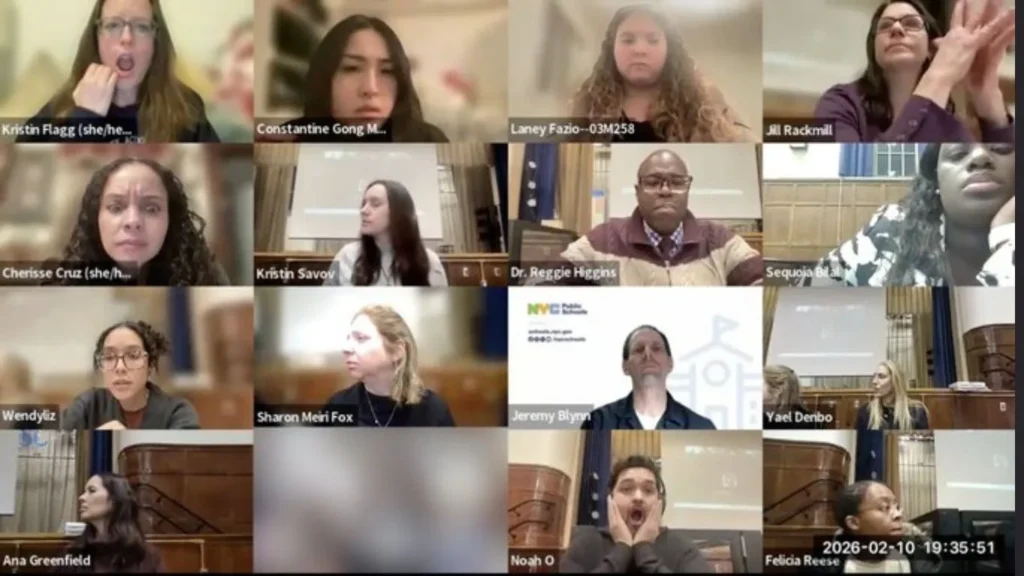
During testimony from a student, Allyson Friedman’s microphone was reportedly unmuted. She was recorded making remarks that many viewers interpreted as racially offensive. The statements, which circulated widely online in video clips, triggered immediate backlash.
The incident quickly gained traction across social media platforms and news outlets. Within days, Allyson Friedman was facing significant criticism from parents, educators, activists, and members of the academic community.
The speed at which the video spread amplified the controversy and placed intense public scrutiny on both Friedman and her institution.
2. The Statements That Led to National Attention
The remarks attributed to Allyson Friedman were widely condemned as racially insensitive. Critics described the comments as harmful and unacceptable, especially given her role as a university professor and scientist.
Because the video circulated without broader conversational context, many observers focused solely on the statements themselves. The reaction was swift, with calls for accountability and institutional action.
The controversy highlights a broader issue in the digital age: how quickly recorded remarks—intentional or not—can escalate into national debates. In this case, Allyson Friedman’s comments during a public education meeting were viewed by many as deeply troubling.
Public trust, especially for educators and researchers, can be fragile. Once controversy enters the picture, it often overshadows years of professional work.
3. Allyson Friedman’s Public Apology and Explanation
Following the backlash, Allyson Friedman issued a public apology on X (formerly Twitter) and provided statements to media outlets.
In her response, she explained that she was attempting to discuss systemic racism with her child, who was present during the Zoom meeting. According to her statement, she referenced a historical trope cited by historian Carter G. Woodson in an effort to illustrate the harmful legacy of racist thinking.
Friedman stated that her comments were taken out of context and were part of a broader discussion about racism rather than an endorsement of discriminatory views. She described the remarks as a mistake and expressed regret for the harm caused.
Despite the apology, public reaction remained divided. Some individuals accepted her explanation, while others argued that the language used was inappropriate regardless of context.
The Allyson Friedman controversy demonstrates how public apologies, even when issued quickly, do not always resolve reputational damage.
4. Hunter College Launches Institutional Review
In response to the incident, Hunter College released a public statement calling the remarks “abhorrent.” The institution confirmed that the matter is being reviewed under its conduct and non-discrimination policies.
As part of the City University of New York (CUNY) system, Hunter College has procedures for investigating allegations of misconduct involving faculty members. The review process typically includes examining the circumstances, gathering statements, and determining whether university policies were violated.
As of late February 2026, Allyson Friedman remains employed at Hunter College, but the investigation is ongoing.
Institutional responses in cases like this are closely watched. Universities must balance academic freedom, due process, and community standards. The outcome of the review may influence not only Friedman’s professional future but also broader discussions about accountability in higher education.
5. Her Academic Career and Research Background
Before the controversy, Allyson Friedman was primarily known for her work in neuroscience. Her lab focuses on how ion channels and neural circuits within the mesolimbic reward system influence resilience to stress, depression, and anxiety.
Her research examines how the brain maintains healthy dopamine activity, particularly through the regulation of potassium channels. This work has contributed to understanding potential new pathways for antidepressant treatments.
In 2015, she was a finalist for the Blavatnik Regional Award, recognizing promising young scientists for innovative research.
Friedman earned her B.A. from Barnard College, Columbia University, completed her Ph.D. at Mount Sinai School of Medicine (NYU), and conducted postdoctoral research at the Icahn School of Medicine at Mount Sinai.
The Allyson Friedman controversy has therefore created a sharp contrast between her scientific achievements and the public criticism she now faces.
Broader Impact of the Allyson Friedman Controversy
The case has sparked wider conversations about:
- Accountability for public comments made by educators
- Context versus impact in controversial speech
- The role of social media in shaping narratives
- Institutional responsibility in higher education
It also underscores how quickly academic professionals can find themselves at the center of national debates.
For many observers, the central question is whether the remarks reflect personal views or were genuinely part of an attempt to explain systemic racism in a private conversation that became public.
Until the institutional review concludes, the Allyson Friedman controversy remains an evolving story.
What Happens Next?
The outcome of Hunter College’s investigation will likely determine the next chapter in this case. Possible scenarios range from formal disciplinary action to mandated training or policy clarification.
Public attention may fade over time, but digital records rarely disappear. The long-term reputational effects for Allyson Friedman will depend not only on the investigation’s findings but also on how the broader academic and local communities respond.
For now, the Allyson Friedman controversy stands as a reminder of how public discourse, technology, and accountability intersect in modern professional life.
Who is Allyson Friedman?
Allyson Friedman is a neuroscientist and Associate Professor of Biology at Hunter College. Her research focuses on neural circuits, stress resilience, and mood disorders.
What happened during the February 2026 meeting?
During a Community Education Council District 3 Zoom meeting, Friedman’s microphone was reportedly unmuted while she made remarks that were widely criticized as racially offensive. A video of the incident circulated online.
Did Allyson Friedman apologize?
Yes. Allyson Friedman issued a public apology and explained that she was attempting to discuss systemic racism with her child and referencing a historical trope, not endorsing discriminatory beliefs.
Is Hunter College investigating the matter?
Yes. Hunter College confirmed that it is reviewing the situation under its conduct and non-discrimination policies. As of late February 2026, the investigation is ongoing.
What is Allyson Friedman known for academically?
She is known for research on ion channels and dopamine regulation in the brain, particularly within the mesolimbic reward circuit. Her work explores resilience to stress, depression, and anxiety.
Has she been fired?
As of the latest updates in February 2026, Allyson Friedman remains employed at Hunter College while the investigation continues.


